|
1
|
|
|
2
|
- Most objects "reflect" rather than emit light.
- The spring model of the atom works well in explaining reflection.
- Radiations that match the resonant frequencies of the atoms are
absorbed.
- Frequencies of the radiations on either side of the resonant frequencies
are “reflected.”
|
|
3
|
- Objects can only reflect the light that is in the source illuminating
the object.
- Demo – Razorback Football in Cyan Light (Next Slide)
|
|
4
|
- As light passes through materials some frequencies of light are removed
(absorbed) while other frequencies are transmitted.
- The degree of transmission depends on how transparent the material
happens to be.
|
|
5
|
- Color filters are good examples of selective transmission.
- Demo – Color Filters and White Light
|
|
6
|
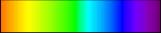
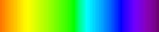
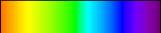
- All visible frequencies make up white light.
- Example: The sun emits all
frequencies and its light is white.
- (Actually it is slightly yellowish to us on Earth, which possibly
explains why we are more sensitive to light in the middle of the
spectrum.)
|
|
7
|
|
|
8
|
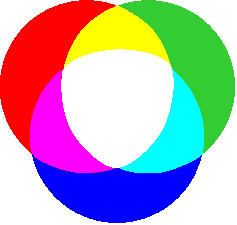
- Through color addition you are able to see a wide range of colors from a
color TV or color projector which actually only emit three different
colors.
- These colors are red, green, and blue.
- They are called the additive primaries.
|
|
9
|
- Your vision system “adds” these together to see single colors from a
single location illuminated by more than one color.
- You even see colors that don’t appear in the continuous emission
spectrum of the sun.
- Red, green, and blue are used as the additive primaries because this set
of three will produce the widest range of colors that you visually
experience.
|
|
10
|
- On the next slide you will see what happens as you add colors to produce
other colors.
|
|
11
|
|
|
12
|
|
|
13
|
|
|
14
|
- Any two colors that add to give white are said to be complementary
colors.
|
|
15
|
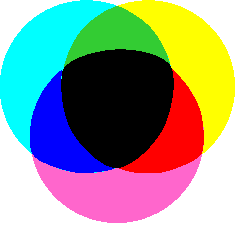
- Subtractive primaries - YELLOW, CYAN, and MAGENTA
- Example - Mixing paints, zip-lock sandwich bags, color printing
|
|
16
|
|
|
17
|
- Through color subtraction you are able to see a variety of colors from
printings, paintings, etc.
- If you have ever bought printer inks, you will notice that the ones used
to provide a variety of colors in printing are yellow, cyan, and magenta.
- They are called the subtractive primaries.
|
|
18
|
- In subtraction, colors are eliminated by the absorption of colors that
were in the original illuminating source.
- This particular set of three colors, yellow, cyan, and magenta, will
produce the widest range of colors that you visually experience.
|
|
19
|
- On the next slide you will see what happens as you remove different
colors from white light.
|
|
20
|
|
|
21
|
|
|
22
|
|
|
23
|
|
|
24
|
|
|
25
|
- It should be noted from the previous that objects that reflect a
particular color are themselves good absorbers of the complimentary
color of that particular color.
- For examples:
- A red object is a good absorber of cyan and vice versa.
- A blue object is a good absorber of yellow and vice versa.
- A green object is a good absorber of magenta (blues and reds) and vice
versa.
|
|
26
|
- One man’s view.
- Just as resonating tuning forks scatter sound, so do particles in our
atmosphere scatter light.
- N2 and O2 scatter high frequencies which are near
natural frequencies of N2 and O2.
- (Natural frequencies are in the UV.)
- This scattering produces the bluish sky.
- The blue end of the spectrum is scattered ten times better that the red
end.
|
|
27
|
|
|
28
|
- If the atmosphere becomes thicker or the paths of light through the
atmosphere become longer, more of the longer wavelengths of light will
be scattered.
|
|
29
|
- Droplet size dictates which colors are scattered best.
- Low frequencies scatter from larger particles.
- High frequencies scatter from small particles.
|
|
30
|
- Electrons close to one another in a cluster vibrate together and in
step, which results in a greater intensity of scattered light than from
the same number of electrons vibrating separately.
- Large drops absorb more and scatter less.
|
|
31
|
- Water quite often looks bluish.
- This is due to reflected “sky light.”
- A white object looks greenish blue when viewed through deep water.
|
|
32
|
- Water is a strong absorber in IR and a little in red.
- Remove some of the red and cyan is left.
- Crabs and other sea creatures appear black in deep water.
|
|
33
|
- Colorblindness (color deficiency) affects
- about 10% of population
- Red-green is predominant
|
|
34
|
- Slides - After Images
- After images are due to conal fatigue.
- Cones that have been “firing” for a while will not “fire” as well as
“rested” cones when all are exposed to white light.
|
|
35
|
|
|
36
|
|
|
37
|
- (a) additive primaries
- (b) secondary colors
- (c) complementary colors
- (d) fluorescent colors
- (e) interference colors
|
|
38
|
- (a) red
- (b) green
- (c) blue
- (d) cyan
|
|
39
|
- (a) cyan
- (b) red
- (c) yellow
- (d) green
- (e) black
|
|
40
|
- (a) mirrors which reflect only blue light
- (b) resonators which scatter blue light
- (c) sources of white light
- (d) prisms
- (e) none of these
|
|
41
|
- (a) red
- (b) blue
- (c) cyan
- (d) green
- (e) white
|

 Notes
Notes