|
1
|
|
|
2
|
- Particle Motion
- and
- Wave Motion
|
|
3
|
- Vibration -
- Wiggle in time
|
|
4
|
- Demo - Metronome
- Demo - Bowling ball pendulum
|
|
5
|
|
|
6
|
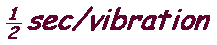
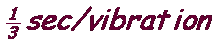
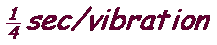
- Timing
- Oil prospecting
- Walking
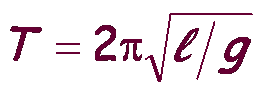
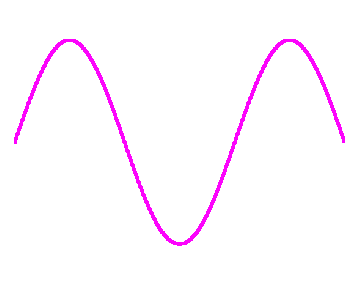
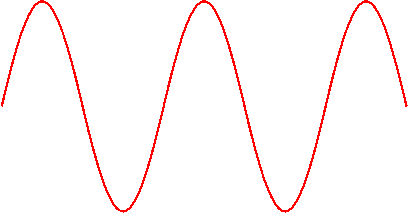
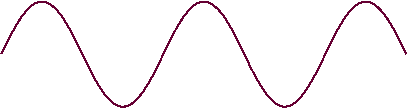
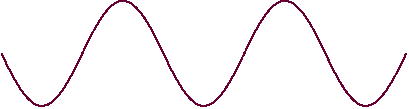
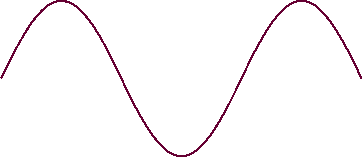
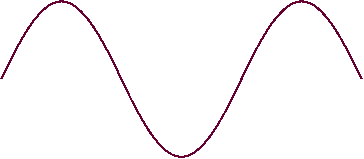
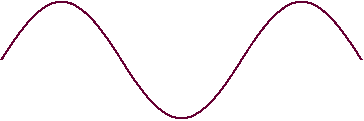
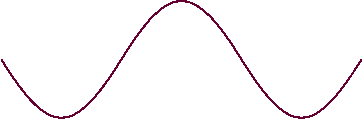
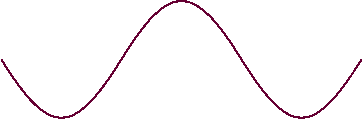
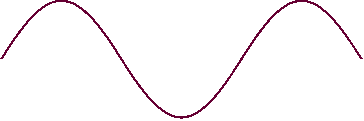
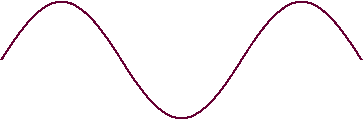
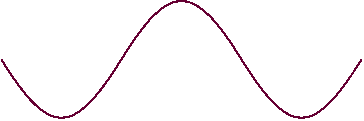
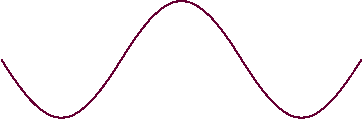
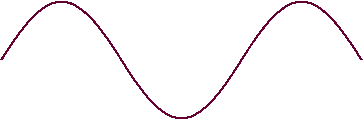
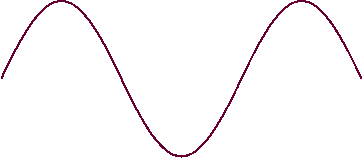
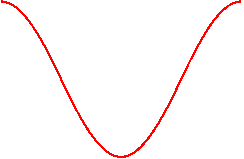
- When the oscillation is small, the motion is called simple harmonic
motion and can be described by a simple sine curve.
|
|
7
|
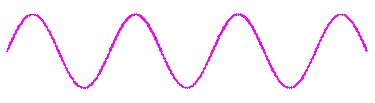
- Frequency ( f ) is the number of vibrations per unit of time made by the
vibrating source.
- Units -
- cycles per second
- 1/s
- Hertz (Hz)
|
|
8
|
|
|
9
|
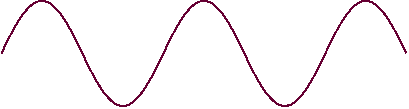
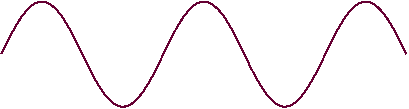
- Distance between adjacent crests in a transverse wave
- Distance a wave travels during one vibration
- Units
- - meters or feet
|
|
10
|
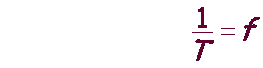
- The period (T ) of a vibration is the time required to make one
vibration.
- The period (T ) of a wave is the time required to generate one wave.
- It is also the time required for the wave to travel one wavelength.
|
|
11
|
|
|
12
|
|
|
13
|
- Energy is transported by
- particles or waves.
- A wave is a disturbance transmitted through a medium.
- Exception: light does not require
a medium.
|
|
14
|
- Demo – Waves on a rope
- URL - Transverse wave
- A disturbance moves through the medium.
- Elements of the medium vibrate.
- Examples:
|
|
15
|
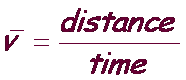
- The average speed of anything is defined as
|
|
16
|
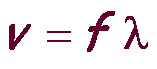
- For a wave, if the distance traveled is a wavelength (l), then the time
to travel this distance is the period (T ). Then
|
|
17
|
- is true for all waves.
- Demo - Complete Bell Wave Machine
- Note: v is dictated by the medium.
- (must change medium to change
v)
- f is dictated by the source.
- (must change the source to
change f )
|
|
18
|
- Video - Slinky Transverse Waves
- Examples:
- string musical
instruments
- ripples on water
- electromagnetic waves
|
|
19
|
- Video - Slinky Longitudinal Waves
- Parameters
- Rarefactions are regions of low density.
- Compressions (condensations) are regions of high density.
- l is the distance between successive rarefactions or successive
compressions.
|
|
20
|
- Example: sound in air
- URL - Transverse & longitudinal waves
|
|
21
|
- Video - Superposition of Waves
- Slide - Interference
|
|
22
|
|
|
23
|
|
|
24
|
|
|
25
|
|
|
26
|
|
|
27
|
|
|
28
|
- When two sets of waves of equal amplitude and wavelength pass through
each other in opposite directions, it is possible to create an
interference pattern that looks like a wave that is “standing
still.” It is a changing
interference pattern.
|
|
29
|
- There is no vibration at a node.
- There is maximum vibration at an antinode.
- l is twice the distance between successive nodes or successive
antinotes.
|
|
30
|
|
|
31
|
- Refers to the change in frequency when there is relative motion between
an observer of waves and the source of the waves
|
|
32
|
- When a source of waves and an observer of waves are getting farther
apart, the observer of the waves “sees” a frequency for the waves that
is lower than the emitted frequency.
|
|
33
|
- All waves exhibit the Doppler effect.
- A particularly interesting example is used by astronomers to determine
if light emitting objects (such as stars) are getting closer to us or
farther away.
- On average most stars are moving farther away, and their light spectra
are “red shifted.”
|
|
34
|
- Lab Absorption Spectrum of Element X
- Star Absorption Spectrum of Element X
|
|
35
|
- Radar bounced off a spinning planet can exhibit a Doppler effect and
lead to a determination of the spin rate of the planet.
- This was used to discover that Venus has a retrograde spin.
- Of course police use the Doppler effect to catch speeding motorists.
|
|
36
|
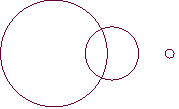
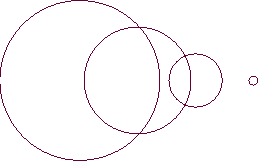
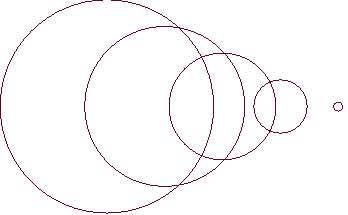
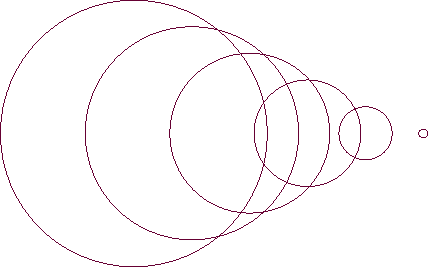
- Waves in front of moving object pile up.
- Slide - Wave Barrier
- Slide - “Bow” Wave
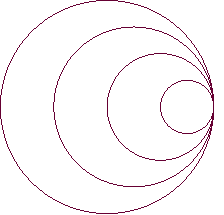
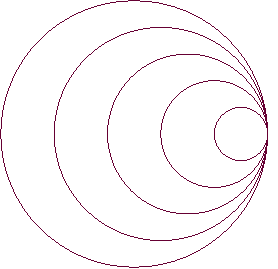
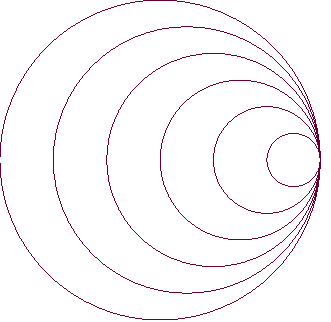
- The familiar bow wave generated by a speedboat knifing through the water
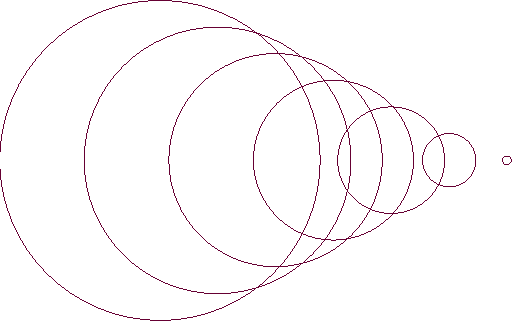
is a non-periodic wave produced by the overlapping of many periodic
circular waves. It has a constant
shape.
|
|
37
|
- Just as circular waves move out from a swimming bug, spherical waves
move out from a flying object. If
the object flies faster than the waves, the result is a cone-shaped
shock wave.
- Demo - Cone of Waves
- There are two booms, one from the front of the flying object and one
from the back.
|
|
38
|
- Demo – Crack whip
- Video - FB-111 Sonic Boom
- Video - FS14 Sonic Boom
- Word Doc - Sonic Boom
- The boom is not produced just when the flying object “breaks” through
the sound barrier.
|
|
39
|
- - slower than the speed of sound
- Supersonic
|
|
40
|
|
|
41
|
- (a) cuts it in half
- (b) increases it by the square of 2
- (c) nothing
- (d) doubles it
|
|
42
|
- (a) wavelength
- (b) medium
- (c) source of the sound
- (d) speed
- (e) amplitude
|
|
43
|
- (a) the frequency
- (b) the wavelength
- (c) the amplitude
- (d) the period
- (e) the medium of transmission
|
|
44
|
- (a) 5
- (b) 15
- (c) 75
- (d) 10
- (e) 3
|
|
45
|
- (a) rarefactions
- (b) compressions
- (c) density holes
|
|
46
|
- (a) is greater than what the source emits
- (b) is less than what the source emits
- (c) is the same as what the source emits
|
|
47
|
- (a) because the plane breaks through the sound barrier
- (b) when the plane reaches the speed of sound
- (c) by the plane traveling faster than the speed of sound
- (d) by the plane traveling slower than the speed of sound
|

 Notes